
LEARN & DECIDE
Faqs & Myths on Blood Stem Cell Donation
General
What is blood stem cell donation?
Blood stem cell donation in India is a life-saving medical process where healthy stem cells from a voluntary donor are collected and transplanted into patients suffering from blood cancers and blood disorders such as leukemia, lymphoma, aplastic anemia, and thalassemia.
These healthy stem cells help rebuild the patient’s blood and immune system and can potentially save lives. DATRI blood stem cell donors registry helps connect patients with matching unrelated donors across India and globally.
Why is blood stem cell donation important?
Blood stem cell donation gives hope to patients battling life-threatening diseases such as leukemia, lymphoma, thalassemia, and aplastic anemia. Since most patients are unable to find a matching donor within their family, unrelated donors from registries like DATRI become their best chance for survival.
Why is a blood stem cell donor registry important in India?
Only about 25% of patients find a matching donor within their family, while the remaining patients depend on a blood stem cell donor registry to identify unrelated matches.
Increasing the number of registered blood stem cell donors in India improves the chances of finding life-saving matches for patients with blood cancers and disorders such as thalassemia.
Why should I trust DATRI?
DATRI is registered as a Section 8 not-for-profit organization under the Government of India. Contributions made to DATRI are eligible for tax exemption under Section 80G.
With over 6.5 lakh registered donors and 1800+ lives saved, DATRI is India’s largest blood stem cell donors registry.
DATRI is registered with the World Marrow Donor Association (WMDA) and is connected to the global Search, Match & Connect platform, formerly known as Bone Marrow Donors Worldwide (BMDW), enabling access to international donor searches and collaborations.
Transparency, donor safety, ethical practices, and patient support remain central to DATRI’s mission.
Registration
Who can register as a blood stem cell donor?
Healthy individuals between the ages of 18 and 50 years can register as potential blood stem cell donors.
Donors should be in good general health and free from serious medical conditions or infections. Final eligibility is determined through medical screening at the time of donation.
How can I register with the DATRI blood stem cell donors registry?
You can register online with the DATRI blood stem cell donors registry by filling out a simple form and providing a cheek swab sample for HLA typing.
Once your sample is processed, your details are added to the blood stem cell donor registry, helping patients searching for a matching blood stem cell donor in India.
What is HLA typing?
HLA (Human Leukocyte Antigen) typing is a specialized genetic test used to identify tissue compatibility between a donor and a patient.
HLA markers act like unique identifiers for the immune system. A close HLA match is extremely important for a successful blood stem cell transplant and helps reduce the chances of transplant rejection or complications.
Why is HLA matching important?
A close HLA match improves the chances of a successful transplant and reduces the risk of complications after transplantation.
Since HLA types are inherited genetically, patients are more likely to find matches among donors from similar ethnic backgrounds.
How does the DATRI blood stem cell donors registry work?
DATRI blood stem cell donors registry maintains a database of registered donors and their HLA types.
When a patient requires a transplant, the registry searches its database and international networks to identify a suitable matching donor. If a match is found and the donor is medically eligible and willing, the donation process is initiated.
What are the chances of finding a matching donor?
Finding a matching unrelated blood stem cell donor can be extremely challenging. The probability of finding the right donor may range from 1 in 10,000 to 1 in millions, depending on the patient’s HLA type and ethnic background.
This is why every new donor added to the DATRI blood stem cell donors registry increases hope for patients waiting for a life-saving transplant.
Will donating blood stem cells weaken my immune system?
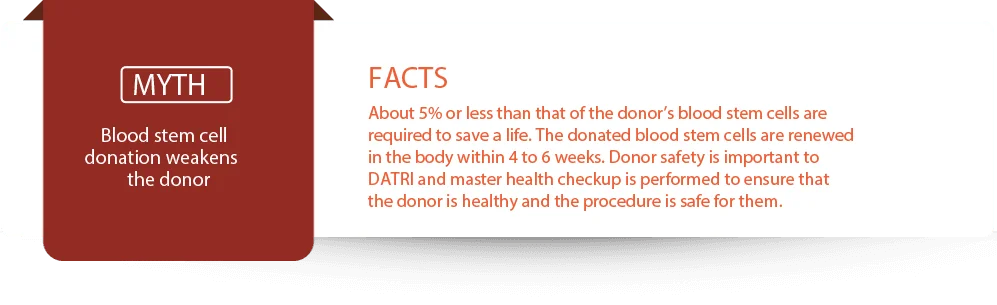
No. Your body naturally replenishes the donated stem cells within a few weeks. Blood stem cell donation does not permanently weaken your immune system.
Can I change my mind after registering as a donor?
Yes. Joining the registry is completely voluntary, and donors can choose to withdraw at any stage.
However, if you are identified as a matching donor for a patient preparing for transplant, withdrawing at the final stage could seriously affect the patient’s treatment and chances of survival. DATRI therefore encourages donors to make an informed and committed decision while registering.
How long will I remain on the donor registry?
Registered donors generally remain on the registry until the age of 50, unless they choose to withdraw earlier or become medically ineligible.
Will my personal information remain confidential?
Yes. DATRI follows strict confidentiality, compliance, and data protection protocols to safeguard donor and patient information at every stage.
Donor and patient identities are protected in accordance with registry guidelines, international standards, and medical ethics. Personal information is never shared without appropriate authorization.
Does the donor’s blood group need to match the patient’s blood group?
No. Blood group matching is not as important as HLA matching in blood stem cell transplantation.
A successful transplant mainly depends on close Human Leukocyte Antigen (HLA) compatibility between the donor and patient.
Can people with common medical conditions still register?
Certain common medical conditions may still allow individuals to register, while others may not.
Eligibility depends on factors such as the type of medical condition, medications, and overall health status. If a donor is identified as a potential match, DATRI’s medical team conducts a detailed medical evaluation to ensure the safety and well-being of both the donor and the patient.
Stem Cell Donation Process
What happens if I am identified as a potential match?
If you are identified as a potential match for a patient, DATRI will contact you for additional confirmatory testing and medical evaluation.
You will receive complete guidance and support throughout the process before proceeding with donation.
How does the blood stem cell donation process work?
The blood stem cell donation process begins when a registered donor is identified as a potential match for a patient.
The donor then undergoes confirmatory testing, medical evaluation, and counselling before donation. Depending on the patient’s medical requirement, stem cells are collected either through Peripheral Blood Stem Cell (PBSC) donation or Bone Marrow (BM) donation.
Throughout the blood stem cell donation process, DATRI ensures complete medical guidance, donor safety, and logistical support.
What are the methods of blood stem cell donation?
There are two methods of donation:
Peripheral Blood Stem Cell (PBSC) Donation
This is the most common method. Stem cells are collected from the bloodstream using a procedure similar to blood donation.
Bone Marrow Donation
Stem cells are collected directly from the pelvic/hip bone under anaesthesia in a hospital setting.
The transplant physician decides the appropriate method based on the patient’s medical needs.
Is blood stem cell donation painful?
Most donors describe blood stem cell donation as manageable and not significantly painful.
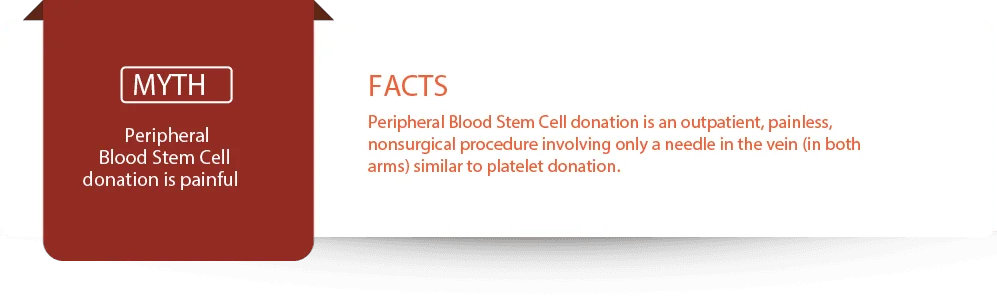
In PBSC donation, the process is similar to donating platelets or blood. Some donors may experience temporary body aches or fatigue due to the medication used before collection.
In bone marrow donation, the procedure is performed under anesthesia, so the donor does not feel pain during the collection. Mild soreness afterward is temporary and usually resolves within a few days.
Are there any side effects of donation?
Blood stem cell donation is generally very safe.
Some donors may experience temporary side effects such as:
- Fatigue
- Body aches
- Headache
- Mild soreness or discomfort
These effects are usually short-term and closely monitored by medical professionals.
Will my stem cells reduce permanently after donation?
No. The body naturally replenishes the donated stem cells within a few weeks. Blood stem cell donation does not reduce your body’s long-term ability to produce healthy stem cells.
How is donor safety ensured during the donation process?
Donor safety is DATRI’s highest priority throughout the blood stem cell donation process.
A comprehensive medical evaluation, including infectious disease screening and overall health assessment, is conducted before donation. The process proceeds only after medical clearance from qualified doctors and transplant specialists.
Donors are carefully monitored before, during, and after donation to ensure their safety and well-being.
What is the recovery time after donation?
For PBSC donation, most donors return to normal activities within 24 to 48 hours.
For bone marrow donation, recovery may take a few days due to mild soreness or tiredness. The body naturally replenishes the donated stem cells within a few weeks.
How long does the donation process take from the time the donor is found to be a match?
The timeline may vary depending on the patient’s treatment schedule and the donation method.
From confirmatory testing to actual donation, the process may take several weeks. DATRI’s team coordinates closely with donors throughout the journey.
What happens after I donate blood stem cells?
The donated stem cells are transplanted into the patient to help rebuild their blood and immune system.
For many patients battling blood cancers or blood disorders, a donor transplant can be life-saving and may offer the possibility of long-term recovery or cure.
Can a person donate more than once?
Yes, a donor may be requested to donate again if medically eligible and if required for the patient’s treatment. However, repeat donations are relatively uncommon.
Donor safety is always the highest priority during every stage of the process.
Who covers the expenses related to donation?
All donation-related expenses are taken care of by DATRI, including:
- Medical tests and procedures
- Travel and accommodation
- Meals and local transportation
- Loss of wages, where applicable
A medical or sick leave certificate can also be provided for workplace documentation, if required. Many organizations support the cause and recognize blood stem cell donors for their life-saving contribution.
Donation is entirely voluntary, and donors do not receive financial compensation.
What happens if a donor experiences medical complications?
Blood stem cell donation is considered very safe, and donors are carefully monitored throughout the process.
A comprehensive medical evaluation, including infectious disease screening and overall health assessment, is conducted before donation. The process proceeds only after medical clearance from qualified doctors and transplant specialists, making serious complications extremely rare.
In the unlikely event of any donation-related medical complication, DATRI ensures that appropriate medical care, guidance, and support are provided.
The safety and well-being of donors remain DATRI’s highest priority.
For Patients & Families
What is a blood stem cell transplant?
A blood stem cell transplant is a medical procedure in which damaged or diseased blood-forming stem cells are replaced with healthy stem cells from a donor.
The transplant helps rebuild the patient’s blood and immune system and is often used to treat serious blood cancers, immune disorders, and genetic blood diseases.
Which diseases can be treated through blood stem cell transplantation?
Blood stem cell transplantation can help treat several life-threatening diseases, including:
- Leukemia
- Lymphoma
- Thalassemia
- Aplastic anemia
- Multiple myeloma
- Certain immune deficiency disorders
For many patients, a matching donor offers the best chance of survival and recovery.
Can blood stem cell transplantation help thalassemia patients?
Yes. Blood stem cell transplantation is currently considered one of the best thalassemia treatment options in India for eligible patients.
A successful transplant can help thalassemia patients become free from lifelong blood transfusions and related complications. However, finding a matching blood stem cell donor remains one of the biggest challenges for many families.
DATRI blood stem cell donors registry works to improve donor availability for thalassemia patients across India by expanding the unrelated donor pool.
Why is it difficult for patients to find a donor?
Finding a matching donor for patients depends on close HLA compatibility, which is inherited genetically.
Since India has tremendous genetic diversity, patients often require donors from similar ethnic backgrounds. This makes expanding the blood stem cell donor registry in India extremely important for improving transplant access and survival outcomes.
How are blood stem cells used in treatment?
Healthy blood stem cells collected from a donor are infused into the patient’s bloodstream, similar to a blood transfusion.
These cells travel to the bone marrow and begin producing healthy blood cells, helping restore the patient’s immune and blood-forming system.
Can patients search for donors internationally through DATRI?
Yes. DATRI is connected to the global Search, Match & Connect network (formerly known as BMDW) through the World Marrow Donor Association (WMDA). This allows transplant centres to search for matching donors not only within India but also across international donor registries worldwide.
How long does it take to find a matching donor?
The time required to identify a matching donor varies for each patient.
Some patients may find matches quickly, while others may require extensive searches across national and international registries due to rare HLA types.
In some cases, identifying a potential match may still not guarantee a transplant, as the final donation depends on donor availability, medical suitability, and consent at the time of transplant.
Why are more donors from different parts of India needed on the registry?
HLA types are inherited genetically, and patients are more likely to find matching donors from similar ethnic backgrounds. For example, a patient from a Tamil family may be more likely to find a match among donors with Tamil ancestry, while a patient from a Punjabi family may have a better chance of finding a match among donors with Punjabi ancestry. This is why India needs a large and diverse donor registry that represents all regions and communities, giving every patient a better chance of finding a lifesaving match.
How can patients search for a donor through DATRI?
Treating physicians or transplant centers can initiate a donor search through DATRI’s registry network.
DATRI works closely with transplant centers and international registries to help identify potential matching donors for patients in need.
Can patients communicate directly with donors?
No. Registries across the world follow strict confidentiality and privacy guidelines to protect both donors and patients.
DATRI maintains donor and patient confidentiality at all stages of the transplant journey and acts as the official coordinating body for communication related to the donation process.
Any communication, if permitted under applicable guidelines, follows registry protocols and timelines.
For Supporters & Financial Donors
Why does DATRI need financial support?
Building and maintaining a blood stem cell donor registry involves significant costs including donor recruitment, awareness programs, HLA typing, patient searches, donor coordination, and transplant support services.
Financial contributions help DATRI continue giving patients a second chance at life.
How can I support DATRI’s mission?
You can support DATRI by:
- Making a financial contribution
- Sponsoring donor registrations
- Organizing awareness drives
- Supporting fundraising initiatives
- Volunteering your time and skills
- Spreading awareness about blood stem cell donation in India
Every contribution helps bring hope to patients and families.
Are donations made to DATRI eligible for tax exemption?
Yes. DATRI is registered under Section 80G of the Income Tax Act, and eligible donations qualify for tax exemption benefits as per applicable laws.
Can organizations or educational institutions partner with DATRI?
Yes. Organizations, colleges, and community groups can support DATRI by hosting awareness sessions, donor registration drives, fundraising initiatives, and volunteer programs.
Such partnerships play an important role in expanding the donor registry and spreading awareness about blood stem cell donation in India.
Can I volunteer with DATRI?
Yes. Volunteers play an important role in supporting DATRI’s mission.
Individuals can contribute through awareness campaigns, donor drives, fundraising initiatives, social media advocacy, community outreach, and event support.
For Healthcare Professionals & Hospitals
How does DATRI support transplant physicians and hospitals?
DATRI collaborates with transplant centers, hematologists, oncologists, and hospitals to facilitate unrelated donor searches and stem cell transplants for patients.
The registry provides donor search support, coordination services, and access to both national and international donor networks.
How can hospitals or doctors partner with DATRI?
Hospitals, transplant centers, and healthcare professionals can partner with DATRI for donor searches, patient support, awareness initiatives, and collaborative programs related to blood stem cell transplantation.
Is DATRI connected with international registries?
Yes. DATRI is registered with the World Marrow Donor Association (WMDA) and collaborates with donor registries and transplant centres worldwide, enabling access to potential matching donors across the global registry network.
BLOOD STEM CELL DONATION MYTH BUSTERS
FAQ’s on Registration
Does it cost me anything to register at DATRI Blood Stem Cell Donors Registry?
It costs INR 1800 for DATRI to perform the HLA Typing for a donor to be added to the registry. A donor who wishes to join the registry is requested to pay for his/her HLA typing. All donations to DATRI are 80G exempt.
Do I have to give blood to register as a Blood Stem Cell donor?
No, a simple cheek swab (buccal swab) sample along with completed registration and informed consent forms are all it takes to register as a Blood Stem Cell Donor.
What is a cheek swab / buccal swab?
A cheek / buccal swab, is a non-invasive way to collect cells from the inside of a person’s cheek, which are used to do the HLA typing of a donor.
I just ate, drank tea / coffee, smoked can I swab?
Yes, the HLA typing is not affected by consuming food or by smoking. But one has to make sure to rinse his/her mouth thoroughly before the swab is taken.
Can I swab if I am chewing gum / paan?
Before swabbing, please remove the gum. If you are chewing paan, kindly rinse your mouth thoroughly before swabbing. Stained swabs can be difficult to process.
Is it ok if I don’t know my height, weight and blood group?
Yes, but donors are requested to write an approximate height and weight. If there is a match with a patient these details would be helpful.
Why do you need contact information of a friend or family member for registration?
We need the contact information of another person in the case your contact information changes. We will only contact your friend / family member to get in touch with you, in case we are unable to reach you with your shared primary information.
If I am found to be a match, what next?
If your HLA matches with that of a patient, you will be contacted by a DATRI representative. Read ‘Information on the Donation Process – FAQ’s to know about the process in detail.
What are the chances of my HLA matching?
Your HLA could match the patient’s HLA, within few weeks of registration or it may take years. There is a chance that you may never match. But, if you do get matched, you are the ONLY one who can save the patient’s life.
Is it possible to register/donate with diabetes even though insulin injections are taken every day?
You will not be able to donate if you have insulin dependent diabetes. But if you had been found as the only match, a clearance from the collection center physician is taken for further processing.
I take medicines for heart disease. Can I register/donate Blood Stem Cells?
No, you can’t register/donate Blood Stem Cells if you have or had any kind of heart problems in the past and present.
I am hypertensive (High BP). Can I register/donate as Blood Stem Cell Donor?
Yes, you can register as Blood Stem Cell Donor. But once you are found as a match, a clearance from the collection center physician is taken for further processing.
I am actively trying to get pregnant. Can I register/ donate Blood Stem Cells?
Yes, you can register. If you are a match while you are pregnant, you cannot donate for a period of one and half to two years.
Can Pregnant Women / Nursing Mothers register/ donate Blood Stem Cells?
Yes, you can register. However, pregnant women and nursing mothers can’t donate as the health of the donor is DATRI’s priority.
I have a history of miscarriages. Can I register as Blood Stem Cell Donor?
Yes, you can register. If you are a match while you are pregnant, you cannot donate for a period of one and half to two years.
Will the donation impact my ability to have kids someday?
No, Blood Stem Cell Donation does not have any impact on your ability to have kids someday.
I am anemic. Can I register/donate Blood Stem Cell?
Yes, you can register. Once you are found as a match, a clearance from the collection center physician is taken for further processing.
I had too much to drink last night. Can I still register as Blood Stem Cell Donor?
Yes, you can register as Blood Stem Cell Donor.
I am sick today. Can I register today as Blood stem Cell Donor?
Yes, you can register as Blood Stem Cell Donor.
I have a rare blood group. Can I register Blood Stem Cell Donor?
Yes, you can register.
Once registered, can I refuse to donate when matched?
Being a blood stem cell donor is absolutely voluntary. Please remember that your refusal to donate could mean someone losing a chance to live!
Will a registered person be able to receive a copy of their HLA report?
The reports are shared only when it is formally requested by the donor. The donor has to mail his/her full name and barcode ID number (given in the Donor ID card) along with one government ID proof to hlareport@datri.org after 45 days of registration.
If I have misplaced my donor card / forgotten my donor ID, what should I do?
Please do write to us at followup@datri.org with your full name, date of birth, primary location and we shall share donor ID with you.
FAQ’s on Donation Process
How does the Donation process work?
The various steps of the donation process are explained below
- Confirmatory Typing (CT)
A buccal swab /blood sample is collected to verify the HLA typing.
- Master Health Check-up
A series of tests are done to ensure that the donor is fit and does not have any infectious diseases like Hepatitis B, HIV, CMV etc.
- Donation
The donor will donate blood stem cells either by PBSC or Bone Marrow harvest methods whichever is discussed and consented for.
- Transportation
DATRI Blood Stem Cell Donors Registry arranges to transport the Blood Stem Cells to the patient anywhere in the world.
What is Confirmatory / Verification Typing (CT/VT)?
If your HLA type matches with any patient looking for a match, you will be called upon to donate your Blood Stem Cells to save the patient. A cheek / buccal swab or a small sample of your blood is sent for Confirmatory Typing (CT) to verify your match with the patient.
Why is a health checkup required before donation?
There are two different methods of Blood Stem Cell Donation
- Bone Marrow Donation
- The Peripheral Blood Stem Cell Donation (PBSC Donation)
A medical health check up is mandatory for the donor to proceed with either method of blood stem cell collection. This is to make sure that the donor is healthy before he/she donates, and patient is not put at risk from the collected donor cells.
What is Bone Marrow Donation?
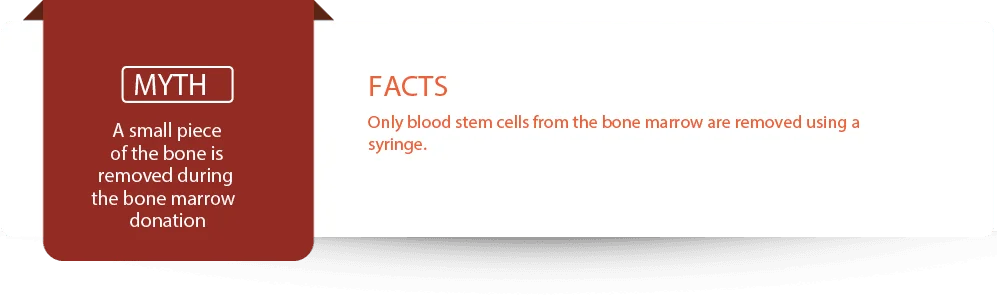
This is a traditional method that has been in practice for more than 40 years. Bone Marrow donation is an inpatient process where bone marrow is extracted from donor’s pelvic region (iliac crest -hip bone) through a process called Aspiration. The procedure happens inside the Operation Theater once the donor is given general anesthesia. The entire procedure will take between 1 and 2 hours.
What is PBSC Donation and GCSF?
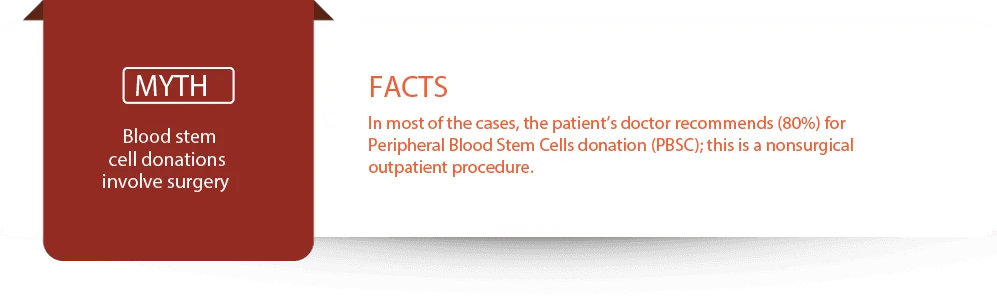
About 80% of Blood Stem Cell Donations across the world are PBSC (Peripheral Blood Stem Cell), where once the donor is declared healthy; he/she is administered sub-cutaneous injection of G-CSF (Granulocyte-Colony Stimulating Factor) growth factor for 5 days. G-CSF is a glycoprotein that stimulates the bone marrow to produce blood stem cells and release them into the blood steam. This 5-day period is called mobilization period as G-CSF is mobilized into peripheral blood. The Collection happens on the 5th day of the mobilization period through a process called Apheresis where in the blood stem cells alone are taken from the donor’s body and rest of the blood is returned to the donor’s blood circulation. Apheresis process is an outpatient procedure which lasts for 3-4hrs, similar to platelet donation. Post collection, the elevated stem cell (granulocyte) count will normalize within 1-2 days.
What are the risks involved with the Blood Stem Cell Donation?
- Bone marrow donation
The most serious risk associated with Donating Bone Marrow involves the use and effects of general anesthesia during extraction. After the bone marrow extraction, you might feel tired or weak and the area where the bone marrow was extracted might feel sore for a few days. You will be advised a pain reliever for the discomfort. You’ll likely be able to get back to your normal routine within a couple of days, but it may take a couple of weeks before you feel fully recovered.
- Peripheral blood stem cell donation
The risks of this type of Blood Stem Cell Donation are minimal. Before the donation, you’ll get injections of GCSF that increases the number of blood stem cells in your peripheral blood. GCSF may sometimes cause, bone pain, muscle aches, headache, fatigue, nausea or vomiting. These usually disappear within a couple of days. You will be advised to take a pain reliever for the discomfort by the collection center physician.
Is it possible to donate Blood Stem Cell where I live?
You can donate in the city where you live, if there is an apheresis / bone marrow collection center. In case there is no apheresis / bone marrow collection center in the city, DATRI will make all the necessary travel and stay arrangements to facilitate donation.
How much Blood Stem Cells will be collected during Blood Stem Cell donation?
A maximum of 300ml of Blood Stem Cells will be collected this is determined by calculating the weight of the patient.
When will the donation take place?
In most of the cases the donation would take place 1 to 3 months after the confirmatory test. We always give notice and accommodate your schedule.
How often can a donor Donate Blood Stem Cells?
With DATRI Blood Stem Cell Donors Registry the donor can only donate Blood Stem Cell up to two times. This number is restricted because DATRI is focused on treating donors with care. However, there are no health restrictions involved with further donations.
Is the donor allowed to know the details of the patient and vice-versa?
As a standard practice across registries worldwide, the details of the donor and patient are kept confidential.
The donor/patient may be told the following details of the Patient/donor
- Age group
- Gender
- Diagnosis
Why can’t I meet the patient now?
All registries across the globe follow a standard protocol. DATRI facilitates donor recipient meeting after one year of donation at a mutually agreed time and place. This standard protocol is to support the donors’ and the recipients’ privacy and discretion.
Why Me? Why not someone else?
You could be that 1 in 10,000 match! It is near impossible to find another alternative because your HLA is unique. 12 characteristics of the HLA are evaluated which have to match with the patient, which makes it so difficult. You are the only hope for the suffering life.
Will my religion permit Blood Stem Cell Donation?
Blood Stem Cell Donation is similar to blood donation. So there are no religious interferences. Moreover, no religion restricts saving another life.
Will Blood Stem Cell Donation affect my fertility?
Irrespective of gender, there have been no reported cases or research evidence that suggests adverse effect on fertility. Blood Stem Cell Donation does not influence or affect fertility.
Won’t I be deprived of blood or Blood Stem Cells if I donate?
Your body will not be deprived of blood stem cells. The 5 days of GCSF injection increases the number of blood stem cells in your blood stream. These ‘extra’ blood stem cells will be collected from your body for the patient. During blood stem cell donation only these extra blood stem cells are collected; the remaining components of blood (RBC, WBC, platelets) are returned to the body.
I am a woman, if I donate my blood stem cells/bone marrow, will it affect my state of pregnancy?
No. For female donors, pregnancy test would be done during health checkup and before donation process. If it is positive you will not be permitted to donate. But you can be a blood stem cell donor one year after child birth, and once you stop nursing your child.
Can I opt for the type of donation (Bone marrow/PBSC) or do I have to follow the method that doctor advices?
Treating physician of the patient will be the right judge to determine whether the patient needs a PBSC product or Bone Marrow product. However, when we counsel the donor for both, the final choice is left with the donor to choose through which method he/she is willing to donate.
Does donating Blood Stem Cells have short-term or long-term effects on my body?
There have been no long term side effects reported. Less than 10% of donors face flu-like symptoms. This is due to G-CSF which increases the number of white blood cells in the blood stream. These symptoms are alleviated with a prescribed paracetamol.
Will my medical condition interfere in me being a donor?
Potential donors who have tested positive for HIV, Type 1 diabetes, or have had epilepsy, or currently pregnant, nursing cannot donate. To know more in detail about exclusion criteria please see (link).
Do I have to be on certain medication after donation?
No. Mostly, it is not required. In case, if it is required then the collection center physician will advise.
What are blood stem cells?
Blood stem cells are immature primitive cells that have the capacity to multiply and mature into different types of blood cells such as
- Red blood cells, which carry oxygen to all parts of the body
- White blood cells, which help fight infection
- Platelets, which help control bleeding.
Why is it important to become a Blood Stem Cell Donor?
Becoming Blood Stem Cell Donor is important because, patient has only 25% chance of finding a HLA matched donor within the family. Those who do not find a match within the family have to depend on a registry like DATRI to find a HLA matched Unrelated Blood Stem Cell Donor willing to donate their blood stem cells. There are more than 4500+ patients in the DATRI’s database who are still waiting for a match. You could be a life-saving match to such a patient and gift them a chance to survive. If you are not registered with DATRI, chances are you might be a lifesaving match for someone and we will not be able to find you.
What is the difference between Bone Marrow and Peripheral Blood Stem Cell Donation?
When Blood Stem Cells are extracted from the Bone Marrow, it is called Bone Marrow Donation. If the Blood Stem Cells are collected from the Peripheral Blood Stream, the procedure is called Peripheral Blood Stem Cell (PSBC) Donation.
Is blood stem cell transplant a 100% cure for the patient/what are the survival chances for the patients?
The chances of survival for children are 80% and adults are 60%. It also depends up on other factors like the severity and the stage of the disease.
How is blood stem cell donation different from a cord blood transplant?
In a cord blood transplant the cord blood stem cells are collected and stored in a cord blood bank, and used when required. But in a blood stem cell donation, blood stem cells are collected only when there is a HLA matched donor and at the correct time of treatment of the patient.
What are my responsibilities as a donor?
Patients rely on the HLA matched donor with a lot of hope to recover. So if you are found to be a match, you should willingly donate your blood stem cells, as you are the ONLY one who can save the patient’s life.
Why does DATRI need monetary donations?
DATRI is a not-for- profit organization registered as a Section 8 company. We depend on monetary contributions to add potential donors to the registry, to help donation process and to support our operational expenses.
What are the eligibility requirements for potential donors?
There are 3 (three) requirements,
- You must be between the age of 18 and 50 years.
- You must fulfill some of the important health guidelines–free from diseases like HIV, Hepatitis, cardiac illness, auto immune disorders, chronic lung disease etc.
- Most important, you should have a kind heart to help someone in need.
What is a cheek swab / buccal swab?
A cheek / buccal swab, is a non-invasive way to collect cells from the inside of a person’s cheek, which are then used to do the HLA typing.
Is my data confidential? How is the data stored?
Yes, all our donor data’s are kept confidential. The data is encrypted and stored in a secure database.
How long does it take for my HLA information to be added to the DATRI registry?
It takes about 5 weeks for the HLA typing results to be added to the registry.
I am a regular blood donor? Can I donate blood stem cells?
Yes, you can donate.
I am going to be married soon. Will donating blood stem cells affect my family life?
Donating blood stem cells does not interfere with your normal routine or your family life. All our donors who have donated are leading a normal life.
How do I update my personal details?
You can send a mail to followup@datri.org or info@datri.org with details to be updated along with the donor number printed on your donor ID card.
Are there any side-effects caused by the injection GCSF?
There are no long term side effects have been recorded. Donor may experience some short term side effects like slight headache, nausea or body ache during the 5 days of the GCSF injection. This decreases once the blood stem cells are collected from the donor’s blood stream. Also, during the period of GCSF injection, a general paracetamol will be prescribed by collection center physician.
FAQ’s on Donor & Recipient Meet
Will I get to know the details of the patient for whom I am donating blood stem cells
Please note that as per guidelines followed by large Blood Stem Cell Registries across the world, personal details of Donor or Patient will NOT be revealed to either party till the minimum stipulated period is over post-transplant. This is also dependent on the prevailing laws in the country of residence of patient. Further, any update on Patient health status will be shared ONLY if the same is made available to us by the Transplant Center. This requires Patient Consent as well. This protocol is strictly adhered to by DATRI in accordance with our data confidentiality policy as well.
Please click on the below link to know more about this:
When will I get to meet my donor/ recipient?
Kindly note that any Donor-Patient interaction will be possible ONLY after a period of minimum 1(one) year post transplant date based on mutual written consent from both parties. Donors and patients can contact each other anonymously via DATRI. This will be further dependent on below parameters:
# The regulations prevalent in the patient’s country of residence
# Health of the patient: Any such interaction is possible ONLY if the patient is in good health and is desirous for the same.